
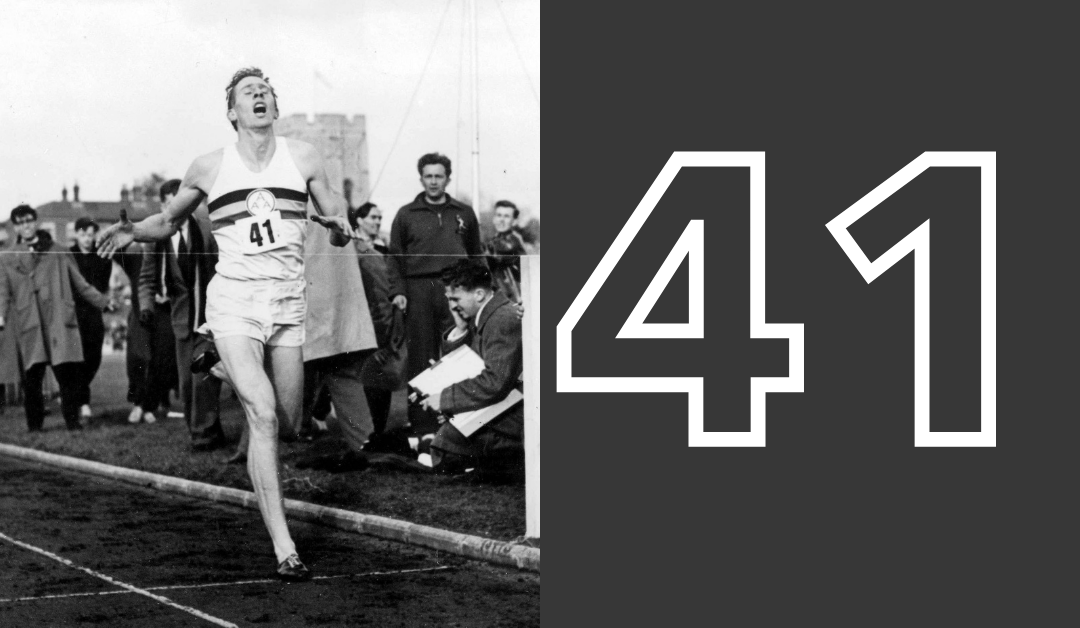
On 6 May 1954 at Iffley Road athletics track in Oxford, history was made when Roger Bannister became the first person to run a mile in under 4 minutes.
Bannister wasn’t the only runner hoping to break this barrier. Athletes had been chasing this seemingly impossible goal for decades and at the time there were a number of people around the world endeavouring to do so.
But Bannister’s time of 3 minutes and 59.4 seconds is the one that history will always remember, despite the fact the record was broken less than seven weeks later by Australian runner, John Landy, with a new world record time of 3:57.9.
That record held for more than three years.
Bannister achieved this remarkable feat with minimal training and, in the spirit of 1950s and 60s boys comics, he was even at work that morning as a doctor in a London hospital before sharpening his spikes and getting the train to Oxford on his own.
It wasn’t even a good day for a world record attempt.
Coaches and pundits alike, were of the opinion that in order to ever achieve this goal a runner would need more favourable weather and a large crowd to spur them on, but Bannister rose to the occasion and with the help of pace setters, Christopher Chataway and Chris Brasher went out and achieved the “impossible”.
A year later, however, three runners broke the four-minute barrier in a single race and since then more than 1400 people have gone on to similarly achieve a goal that was once considered beyond human endurance.
The story of the four-minute mile is a great one all of it’s own but it’s the story behind the story that really matters.
What goes for runners applies similarly to us all and particularly (in the context of the Six O’Clock Club blog) to the entrepreneurs, innovators and investors who make up the majority of our members and readers.
This is not so much about overcoming barriers in the first place.
I’m not suggesting we should all be Roger Bannister.
Rather it’s about being John Landy or one of the three runners from that race in 1955 and recognising that if someone has already been there you can do it too.
Our greatest failing is often, not so much our lack of ambition to go to places no man has ever been before, as a lack of faith in our ability to follow in other people’s footsteps.
Cross THAT mental barrier and anything and everything is possible.