
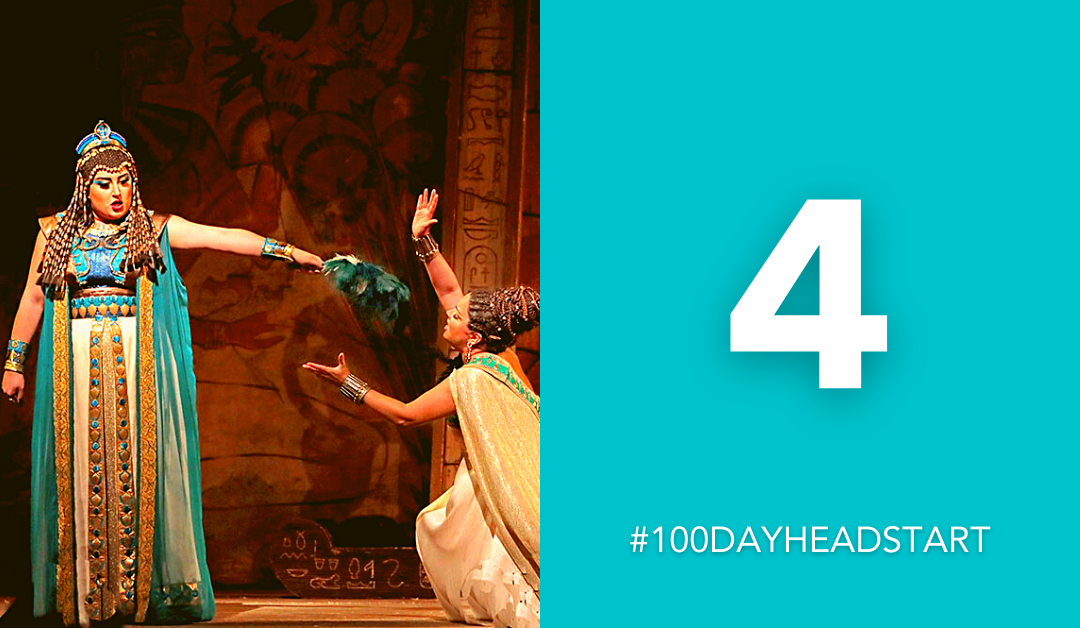
According to the English National Opera website, “set in Ancient Egypt, Aida is a timeless story of love and betrayal against the backdrop of war. The story is a roller coaster of emotions told through Verdi’s powerful music.
Aida is an Ethiopian princess held captive in Egypt, in love with a General, Radames, and he with her and when he is chosen to lead a war with Ethiopia, we follow the conflict of Aida’s love for both Radames and for her country”
Which has absolutely nothing to do with the marketing model developed by the American businessman, E. St. Elmo Lewis, in 1898 other than to serve to GRAB YOUR ATTENTION
The first step in the AIDA marketing journey from Attention, through to Interest, Desire and Action A-I-D-A.
But what is it and why is it still relevant 120 years later?
1. Attention – Your product or service must attract the consumer’s attention, typically through placement, whether in an ad, on your website, social media, video or even your shop window. If it doesn’t stand out in the first place, cause people to stop for a second look, you’re wasting your time. You never get a second chance to make a first impression and none more so when it comes to demanding people’s attention.
2. Interest – Having grabbed the potential customer’s attention you need to give them sufficient information to pique their interest. This might be through providing further information e.g., on your website or in printed material. It could be by video again or maybe through testimonials or case studies. The important thing is to hold on to them for long enough and give them sufficient information for them to proceed naturally to stage three.
3. Desire – Having prompted sufficient interest one of two things might happen. “Attraction marketing” says the customer might naturally be so aroused as to demand acquisition of your product or service. the “take my money!!” scenario. More likely is that you, as the seller, might have to engage further to persuade the customer that they not only want to own your product or service but can’t live without it. This might be through the offer of further information, or it might be by gentle coercion, further illustrating benefits, helping the customer to attach emotion to their purchase. Emotion is a much stronger trigger than need or price in the buying process.
4. Action – If the customer has got this far, chances are they already have your offer in their shopping basket but if not, this is where you step in and close the deal. That might be by simply guiding them through the transaction process. When I was in retail it was as simple as personally taking people to the till. It might be by loading on an extra or a special discount if they waver away from completing the sale. Either way a strong call to action is needed to ensure that desire translates into purchase.
In more recent times there’s been criticism that such a simple model or customer journey doesn’t necessarily reflect all the stages in the buying process but even taking into account the “seven touches” principle (more often recently referred to as twenty touches because of our limited attention span on social media) AIDA still has a place in underpinning the marketing and sales process.
It’s also a very good opera…